Built year prediction of buddha face with heterogeneous label modeled as probabilistic distribution
概要
Analysis of cultural heritages, particularly their construction years, provides new insights into human history. However, due to natural disasters, wars, material deterioration, and human errors, records documenting the construction years of many artifacts have often been lost. Historians and experts can estimate construction years within specific ranges using chemical-based analysis technologies or extensive historical research. Given the vast number of collected artifacts, applying these conventional methods to every artifact is impractical. To address this challenge, we developed a deep neural network model designed for Buddha statues to estimate an artifact’s construction year from its image. One major challenge in this task is the heterogeneity of the labels: the training samples include both precise construction years and possible ranges (e.g., a dynasty or a century) estimated by historians. To unify these heterogeneous labels during training, we represent them as probabilistic distributions. In our previous work Qian et al. (2021), we assumed that the ambiguity in heterogeneous construction year labels followed a Gaussian distribution, assigning the highest likelihood to the midpoint of the designated time range. However, this assumption does not always hold. In this paper, we propose representing heterogeneous construction year labels as a uniform distribution, assigning equal probability to all points within the designated time range. Based on this label representation, we designed a semi-supervised learning loss function to leverage both labeled and unlabeled samples during training. Our experimental results demonstrate that our method achieves a mean absolute error of 34.3 years on a test set consisting of Buddha statues constructed between 400 and 1403. These results are further analyzed in two ways. First, we compared our model’s performance to the image quality BRISQUE score, revealing a correlation between higher image quality and lower prediction error rates. Second, we validated our predictions with experts, assessing the level of agreement with our model, the challenges in determining construction years, and identifying features of interest in the artifacts.
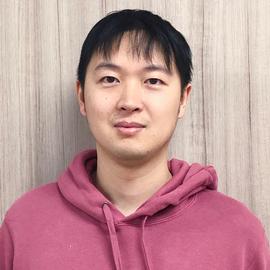
Yiming Qian
招へい研究員
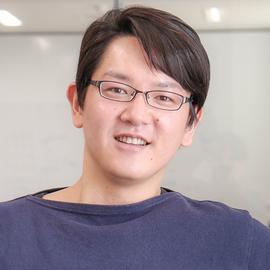
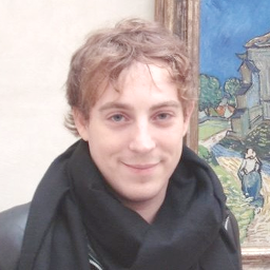
Benjamin Renoust
招へい准教授
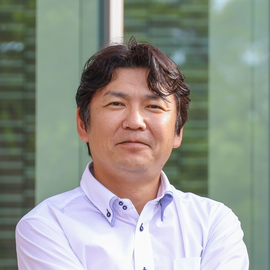
長原一
教授
コンピューテーショナルフォトグラフィ、コンピュータビジョンを専門とし実世界センシングや情報処理技術、画像認識技術の研究を行う。さらに、画像センシングにとどまらず様々なセンサに拡張したコンピュテーショナルセンシング手法の開発や高次元で冗長な実世界ビッグデータから意味のある情報を計測するスパースセンシングへの転換を目指す。