Abstract
Object detection in art is a valuable tool for the digital humanities, as it allows for faster identification of objects in artistic and historical images compared to humans. However, annotating such images poses significant challenges due to the need for specialized domain expertise. We present NADA (no annotations for detection in art), a pipeline that leverages diffusion models’ art-related knowledge for object detection in paintings without the need for full bounding box supervision. Our method, which supports both weakly-supervised and zero-shot scenarios and does not require any fine-tuning of its pretrained components, consists of a class proposer based on large vision-language models and a class-conditioned detector based on Stable Diffusion. NADA is evaluated on two artwork datasets, ArtDL 2.0 and IconArt, outperforming prior work in weakly-supervised detection, while being the first work for zero-shot object detection in art. Code is available at https://github.com/patrick-john-ramos/nada
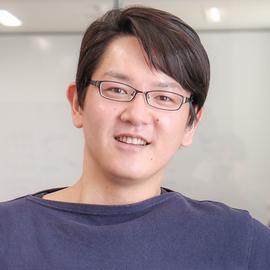
Yuta Nakashima
Guest Professor
Yuta Nakashima is a professor with D3 Center, the University of Osaka. His research interests include computer vision, pattern recognition, natural langauge processing, and their applications.
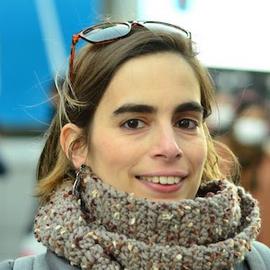
Noa Garcia
Associate Professor (Concurrent)
Her research interests lie in computer vision and machine learning applied to visual retrieval and joint models of vision and language for high-level understanding tasks.