From Pixels to Semantics: Unified Facial Action Representation Learning for Micro-Expression Analysis
Abstract
Micro-expression recognition (MER) is highly challenging due to the subtle and rapid facial muscle movements and the scarcity of annotated data. Existing methods typically rely on pixel-level motion descriptors such as optical flow and frame difference, which tend to be sensitive to identity and lack generalization. In this work, we propose D-FACE, a Discrete Facial ACtion Encoding framework that leverages large-scale facial video data to pretrain an identity- and domain-invariant facial action tokenizer, for MER. For the first time, MER is shifted from relying on pixel-level motion descriptors to leveraging semantic-level facial action tokens, providing compact and generalizable representations of facial dynamics. Empirical analyses reveal that these tokens exhibit position-dependent semantics, motivating sequential modeling. Building on this insight, we employ a Transformer with sparse attention pooling to selectively capture discriminative action cues. Furthermore, to explicitly bridge action tokens with human-understandable emotions, we introduce an emotion-description-guided CLIP (EDCLIP) alignment. EDCLIP leverages textual prompts as semantic anchors for representation learning, while enforcing that the others category, which lacks corresponding prompts due to its ambiguity, remains distant from all anchor prompts. Extensive experiments on multiple datasets demonstrate that our method achieves not only state-of-the-art recognition accuracy but also high-quality cross-identity and even cross-domain micro-expression generation, suggesting a paradigm shift from pixel-level to generalizable semantic-level facial motion analysis.

Yicheng Deng
PhD Student

Hideaki Hayashi
Associate Professor
Hideaki Hayashi is an associate professor with D3 Center, the University of Osaka. His research interests focus on neural networks, machine learning, and medical data analysis.
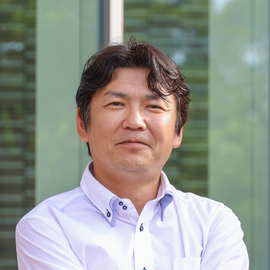
Hajime Nagahara
Professor
He is working on computer vision and pattern recognition. His main research interests lie in image/video recognition and understanding, as well as applications of natural language processing techniques.